

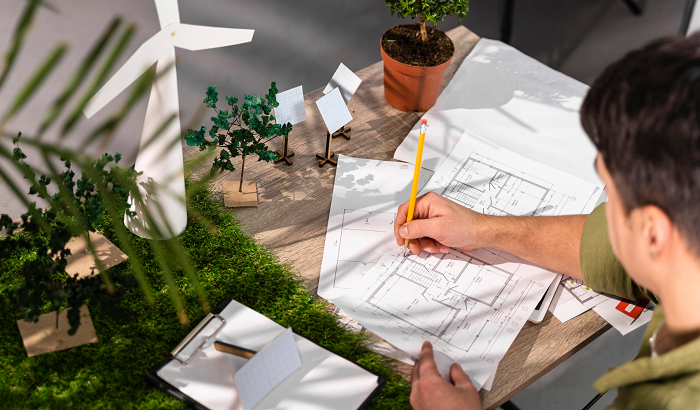
By integrating natural elements, landscape architects blend modern architecture with nature to create functional, sustainable spaces. In this regard, several techniques, such as vertical gardens, green roofs, and reflective surfaces, dissolve the boundary between outdoors and indoors through patios and large windows. Here, we discuss 5 significant ways to blend modern architecture with nature, as preferred by landscape architects.
The modernist principles, followed by architects, foster a seamless connection with nature while addressing human requirements to develop visually appealing spaces, promoting a sense of tranquility. However, the eco-friendly practices by incorporating green infrastructure (living walls, green roofs, etc.) improve biodiversity and air quality. Some popular techniques, like using green walls, reflective glasses, and specific materials like wooden cladding, play a key role in blending nature and architecture, while designs balance practicality and visual appeal.
Effective Ways of Blending Nature with Modern Architecture
Before we learn about the different ways, take a look at the table below to know why this blend is sought by landscape architect firms in recent times:
| Benefit | Description | Example |
| Sustainability | Reduced heat island effect, stormwater management | Green roofs, rain gardens |
| Aesthetic Value | Seamless visual appeal and calm ambiance | Living walls in lobbies |
| Customer Experience | More attractive outdoor seating and gathering spaces | Rooftop gardens in restaurants |
| Health & Wellbeing | Biophilic elements improve mood and productivity | Indoor plants, vertical gardens |
Table 1: Benefits of Integrating Nature in Modern Architecture
-
Rooftop Gardens and Green Roofs
Green roofs and rooftop gardens blend modern architecture and nature by using various plants on building tops for aesthetic and ecological benefits, such as managing stormwater, improving insulation, and creating appealing areas. Several landscape architect firms prioritize innovative designs and functionality, providing a framework to integrate natural components and features.
By covering the roof with vegetation, architects merge the buildings and their surroundings, especially landscape-based designs, while the development of new functional and attractive areas, such as recreational areas and gardens, enhances the usability and value of buildings. Moreover, modern architects use techniques and materials to create robust and green roof systems, which are designed to support vegetation and sound and waterproof.
Note: Thermal regulation and stormwater management are two of the key factors driven by rooftop gardens and green roofs.
-
Vertical Living Green Walls
A green wall, completely or partially covered with vegetation, absorbs carbon dioxide and other pollutants, supported by several growing mediums, such as substrates, soil, or water. These walls help filter several toxins like VOCs, benzene, and formaldehyde, specifically in indoor environments, as well as lower the heating costs and air conditioning up to 20-30% per year.
Green walls play a key role with natural acoustic properties, and in certain restaurant designs in New York, they act as a sound buffer, deflecting, absorbing, and refracting noise. Not only in restaurants, these are ideal for hospitals, schools, and office areas as well.
These walls are a striking architectural feature, blending modern architecture with nature, uplifting any space with natural vibrancy, color, and texture, and architects consider them to break the monotony of concrete and glass.
Research shows biophilic design elements, such as green walls, increase creativity and productivity by 20% and 15%. Apart from these, these walls reduce stress and anxiety, improve cognitive function and mood, and enhance indoor humidity.
-
Eco-Friendly Materials
Eco-friendly materials, such as bamboo, rammed earth, and reclaimed wood, blend modern architecture and nature, reducing environmental impact and providing aesthetic warmth. Landscape architect firms mostly combine these materials with sustainable design principles, such as passive cooling/heating, while they are used alongside modern innovative products like energy-efficient systems to develop a suitable and harmonious environment.
Architects prefer to use bamboo and wood, since they are fast-growing and renewable in nature, durable as structural elements, and add warmth. The restaurant designs in New York are deeply driven by the use of recycled glass, steel, and plastic in reducing waste and the frequent need for extracting new resources.
Apart from these, locally sourced materials, such as granite and sandstone, are widely used, since they minimize carbon emissions and transportation costs.
Note: Architects implement rainwater harvesting and greywater recycling systems and green integration programs to elevate the natural values (e.g., air quality and green visuals) of spaces.
| Restaurant Name | Landscape Feature | Impact |
| Rooftop Bistro | Green roof & herb garden | 20% increase in outdoor reservations |
| Riverside Café | Vertical wall & natural stone | Eco-friendly aesthetic |
| Urban Eatery | Terraced garden patio | Seasonal seating + improved ambience |
Table 2: Example Projects of Nature-Integrated Restaurant Design NYC
-
Sustainable Water Features
The integration of ecological function with aesthetic design, created by sustainable water bodies, fosters a visual harmony, since the water surface reflects the greenery, sky, and architecture. On the other hand, the modern landscape architect firms use modern, advanced water management systems, including greywater recycling and rainwater harvesting.
Cascades and fountains add a rhythm and movement in the restaurant designs in New York, serving as a signature aspect of modern architecture with biophilic design, improving mood, and reducing stress. On the other hand, the use of AI-powered management systems and sensors optimizes water use and detects leaks to ensure efficient operation and balance aesthetic intent with feasible techniques.
Note: Lowering ambient temperature and evaporative cooling help regulate the microclimate in immediate surroundings, especially in dry and hot climates.
-
Native Plant Landscaping
Native plant landscaping blends modern architecture with nature through functional integration and visual harmony, serving as a key aspect of modern architecture. The native species are carefully selected for their year-round appeal with various textures and colors, making the landscape more dynamic.
However, using indigenous plants empowers the septicity and regional values of establishments, fostering an authentic and harmonious outlook. It further ensures the local biodiversity and sustainable integrity by securing proper management of the vegetation, since the native plants are well-adapted to local soil and climate, reducing resource consumption and irrigation costs.
For example, the elevated railway in New York City has been re-envisioned as a major urban park, integrating the native plant species into green designs, revitalizing a dense area.
| Principle | Description | Application in Restaurant Design NYC |
| Connectivity | Seamless indoor–outdoor experience | Patio and terrace integration |
| Sustainability | Use of native plants & eco-materials | Green roofs, vertical gardens |
| Aesthetics | Harmonize with urban architecture | Living walls, natural textures |
| Functionality | Walkways, seating, and accessibility | Outdoor dining flow |
Table 3: Core Principles of Modern Landscape Architecture
Summary
Since sustainability has been a key driving factor in modern business, architects highly value blending modern architectural styles and nature to provide an appealing and long-lasting impact. The use of green walls and sustainable water bodies with architectural designs in restaurants, universities, offices, and other places enhances their public acceptance and corporate values. However, these factors not only influence the corporate outcomes but also reduce the overall environmental impact on a significant scale.
Looking for visually appealing landscape architectures?
Not sure about the quality and sustainable values? Find the best firm near you to experience the elegance of modern architecture and the beauty of nature simultaneously.